
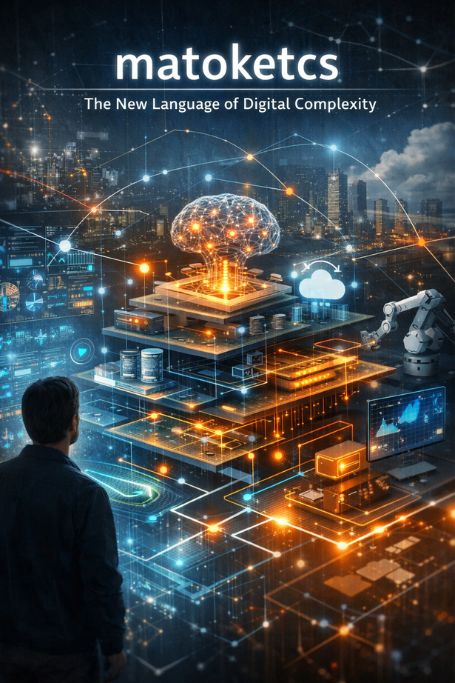
matoketcs and the New Language of Digital Complexity
In the rapidly evolving digital world, new terms often emerge that attempt to describe systems, behaviors, and frameworks that traditional vocabulary cannot fully capture. One such term gaining attention in online tech discussions and conceptual writing spaces is matoketcs. While still unfamiliar to mainstream academic or industrial definitions, matoketcs is increasingly used as a flexible concept to describe structured digital thinking, system interconnection, and adaptive technological environments.
The growing curiosity around matoketcs comes from a simple reality of modern technology: systems today are no longer isolated. Data flows across platforms, artificial intelligence interacts with human decision-making, and digital infrastructures continuously evolve in real time. In this environment, matoketcs is often used as a conceptual bridge to describe how these moving parts relate to each other in structured yet adaptive ways.
The conceptual foundation of matoketcs in digital environments
At its core, matoketcs is understood as a conceptual framework rather than a fixed technology. It does not refer to a specific software, programming language, or hardware system. Instead, it is used to express the idea of organized complexity within digital ecosystems.
In many interpretations, matoketcs represents the hidden architecture behind interconnected systems. This includes how data is processed, how digital tools communicate, and how automated processes align with human-driven inputs. The idea suggests that modern systems are no longer linear but layered, dynamic, and continuously adaptive.
What makes matoketcs particularly interesting is its flexibility. It can be applied to artificial intelligence systems, cloud computing structures, data analytics frameworks, and even digital communication models. This adaptability is one reason why the term has begun appearing in experimental tech writing and conceptual discussions.
matoketcs as a reflection of modern technological evolution
To understand matoketcs, it is important to view it within the broader evolution of technology. Earlier digital systems were built on straightforward cause-and-effect logic. One input led to one output, and systems were designed to function in predictable cycles.
However, modern technology operates differently. Artificial intelligence learns from data patterns, cloud systems distribute workloads dynamically, and interconnected applications respond to real-time user behavior. In such environments, traditional descriptions often fall short.
Matoketcs emerges as a conceptual response to this complexity. It reflects the shift from static systems to fluid ecosystems. Instead of focusing on individual components, it emphasizes relationships between components. This relational understanding is what gives matoketcs its conceptual depth.
The structural interpretation of matoketcs in system design
One of the most common ways matoketcs is described is through system structure. In this interpretation, it represents a layered model where different digital components interact in coordinated but flexible ways.
These layers may include data input systems, processing engines, decision-making algorithms, and output interfaces. Rather than functioning independently, each layer influences the others. This interconnected behavior creates a system that is both stable and adaptive.
Matoketcs, in this sense, is not about rigid architecture. It is about flow, adaptation, and continuous restructuring. The system does not remain static but evolves based on internal and external inputs. This makes it particularly relevant in discussions around AI development, smart systems, and digital transformation strategies.
matoketcs in artificial intelligence and automation
Artificial intelligence is one of the most frequently associated domains when discussing matoketcs. In AI systems, multiple layers of computation, learning models, and data inputs work together to produce intelligent behavior.
Matoketcs is often used as a conceptual way to describe how these layers interact. Instead of viewing AI as a single algorithm, it encourages viewing it as a network of interdependent processes. Each process contributes to learning, prediction, and decision-making in a continuous cycle.
In automation systems, matoketcs can be understood as the invisible structure that allows machines to respond to changing environments. Whether it is automated customer support, predictive analytics, or intelligent workflow management, the underlying idea of matoketcs helps explain how these systems maintain coherence while adapting to change.
The role of matoketcs in data-driven ecosystems
Modern digital ecosystems are driven by data. Every interaction, transaction, and communication generates information that must be processed and interpreted. Matoketcs is often used to describe the way this data flows through interconnected systems.
Instead of treating data as isolated units, matoketcs views it as part of a continuous stream. This stream moves through various stages of collection, processing, analysis, and application. At each stage, the data may influence other systems, creating a feedback loop.
This feedback-driven structure is essential in understanding how platforms like search engines, recommendation systems, and analytics tools function. Matoketcs provides a conceptual lens to understand this ongoing interaction between data and system behavior.
Why matoketcs resonates in modern digital discussions
The increasing mention of matoketcs in online content reflects a broader trend in how people talk about technology. As systems become more complex, there is a growing need for language that captures complexity without oversimplifying it.
Matoketcs resonates because it does not confine itself to a single definition. Instead, it acts as a flexible conceptual tool. Writers, analysts, and digital thinkers use it to describe situations where multiple systems interact in unpredictable yet structured ways.
This flexibility allows matoketcs to be applied across different fields, from software engineering discussions to digital strategy analysis. It becomes a way of thinking rather than a fixed definition.
The philosophical dimension of matoketcs
Beyond technical interpretations, matoketcs also carries a philosophical dimension. It raises questions about how humans understand systems that are too complex to fully map or predict.
In many ways, matoketcs reflects the idea that modern digital environments cannot be fully reduced to simple explanations. Instead, they must be understood as evolving networks of relationships and interactions.
This perspective shifts focus from control to adaptation. Instead of trying to fully control systems, matoketcs encourages understanding how systems evolve and respond. This makes it relevant not only in technology but also in broader discussions about complexity and change.
matoketcs in future digital landscapes
As technology continues to advance, concepts like matoketcs are likely to gain more relevance. Future systems will become even more interconnected, with artificial intelligence, automation, and real-time data processing becoming deeply integrated into everyday life.
In such a future, understanding systems through rigid models may become less effective. Instead, flexible conceptual frameworks like matoketcs may help professionals and thinkers navigate complexity more effectively.
Whether in smart cities, autonomous systems, or advanced digital ecosystems, the principles associated with matoketcs may serve as a way to understand how different technologies interact and evolve together.
The evolving identity of matoketcs
One of the most defining characteristics of matoketcs is that it is still evolving. It does not belong to a fixed category of knowledge. Instead, it exists in a transitional space where meaning is shaped by usage.
This evolving identity makes matoketcs both challenging and intriguing. It reflects how modern language adapts to technological change. As new systems emerge, new terms are created to describe them, and matoketcs is part of this ongoing linguistic evolution.
Conclusion: understanding matoketcs as a living concept
Matoketcs represents more than just a term used in digital discussions. It symbolizes a way of thinking about complexity, interaction, and system behavior in modern technology. While it does not yet have a formal definition in academic or industrial frameworks, its conceptual value lies in its flexibility.
It encourages a shift from viewing technology as isolated tools to understanding it as interconnected ecosystems. In this sense, matoketcs is less about defining something fixed and more about recognizing something constantly evolving.
As digital systems continue to grow in complexity, concepts like matoketcs will likely play a larger role in how we describe, interpret, and engage with the technological world around us.