
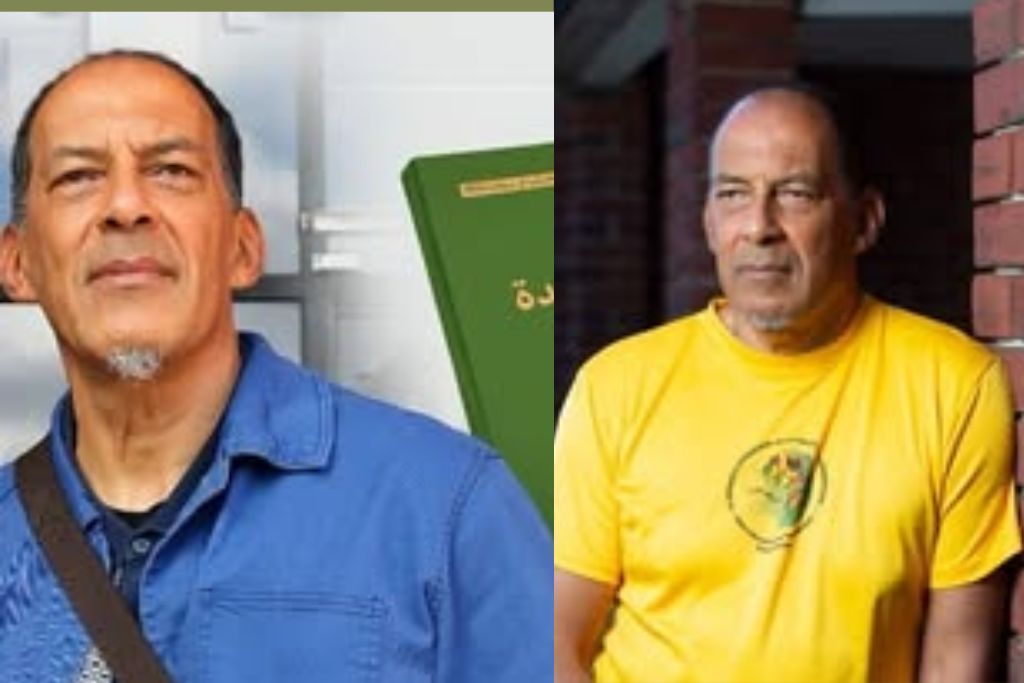
Introduction: Rewriting the Story of Britain
The history of Britain is often told as a linear national story—one that begins and develops within the boundaries of the island itself. Yet the work of Hakim Adi disrupts this familiar narrative and replaces it with something far more complex, global, and historically accurate.
At the centre of his scholarship lies a powerful challenge: the tendency to reduce African and Caribbean history in Britain to a single post-war moment, usually marked by the arrival of the Empire Windrush in 1948. In Adi’s view, this is not just an oversimplification—it is a distortion of centuries of shared history.
Instead, he presents Britain as a place where African and Caribbean people have been present “from the very beginning,” shaping its military, political, cultural, and intellectual life long before modern migration stories.
Historical Continuity of African and Caribbean Presence in Britain
A defining feature of Hakim Adi’s historical argument is continuity. He rejects the idea that African and Caribbean presence in Britain begins in the 20th century and instead traces it back across nearly two millennia.
He highlights Roman Britain, where African soldiers served in the Roman legions stationed along Hadrian’s Wall. Historical interpretations also suggest that individuals of African origin reached high positions within the Roman Empire, including figures associated with imperial leadership whose influence extended into Britain.
Moving into the Tudor period, Adi draws attention to the presence of African individuals in elite households in England. Often referred to in historical records as “Black Tudors,” these figures were not outsiders but integrated participants in domestic and courtly life. Their existence challenges modern assumptions that Britain was historically racially homogenous.
As Britain expanded into a global imperial power, African and Caribbean people became deeply embedded in its economic and political structures. They were not only subjects of empire but also active agents in resistance, abolitionism, and anti-colonial struggle.
Central Argument: Reframing British History
The core argument presented by Hakim Adi is that African and Caribbean people have always been part of British history—not as marginal figures, but as central contributors.
He demonstrates how major milestones in British development cannot be fully understood without their involvement:
- The expansion of democratic rights and universal suffrage
- Britain’s role in defeating fascism in the Second World War
- The creation and development of the National Health Service (NHS)
- The long struggle for civil rights and racial equality
In this interpretation, British history is not separate from African and Caribbean history. Instead, they are intertwined narratives that have shaped each other over centuries.
Early Life and Intellectual Formation
Hakim Adi’s intellectual journey was shaped by a critical observation: the absence of African history in mainstream education. Growing up in Britain during a period when African and Caribbean contributions were rarely included in school curricula, he became increasingly aware of historical silences.
This absence became a defining influence on his academic direction. Rather than accepting the limits of conventional historical narratives, he chose to interrogate them.
His intellectual curiosity eventually led him to specialise in African history, not as an isolated subject, but as part of a broader global system of historical interaction.
Education at SOAS
The academic foundation of Hakim Adi was established at the School of Oriental and African Studies (SOAS), University of London.
He joined SOAS in 1976 and later completed his doctoral research there, earning a PhD in African History in 1994. SOAS provided him with an academic environment focused on global perspectives, postcolonial studies, and non-Western histories.
His education at SOAS became the intellectual base from which he developed his later arguments about African and Caribbean presence in Britain.
Academic Career and Institutional Impact
Hakim Adi has had a long and influential academic career in British higher education.
He worked at Middlesex University, where he contributed significantly to the development of African and Caribbean historical studies. His teaching and research helped bring diaspora history into mainstream academic discussion.
In 2015, he was appointed Professor of the History of Africa and the African Diaspora at the University of Chichester. This appointment marked a historic milestone, as he became the first historian of African heritage to hold a professorship in history in Britain.
At Chichester, he played a key role in curriculum development, public engagement, and the expansion of African diaspora studies in higher education.
Pan-Africanism and Global Historical Thought
A major pillar of Hakim Adi’s work is his study of Pan-Africanism. He treats it not simply as a political movement, but as a global intellectual tradition that connects Africa, the Caribbean, Europe, and the Americas.
He explores how Pan-African ideas shaped anti-colonial struggles, civil rights movements, and global resistance to racial inequality.
His work positions Pan-Africanism as a long-term historical process rather than a short-lived political moment.
Major Works and Books
Hakim Adi is a widely published historian whose work has shaped modern African diaspora studies.
His key publications include:
- Pan-Africanism: A History
- Pan-Africanism and Communism: The Communist International, Africa and the Diaspora, 1919–1939
- West Africans in Britain 1900–60
- Pan-African History: Political Figures from Africa and the Diaspora since 1787
- African and Caribbean People in Britain: A History
Each of these works builds upon his central thesis: that African and Caribbean people are not peripheral to British history but fundamental to its development.
Achievements and Recognition
The contributions of Hakim Adi have had a lasting impact on both academic scholarship and public understanding of history.
His major achievements include:
- First Black professor of history in Britain
- Foundational scholar in African diaspora studies in UK academia
- Creator of educational initiatives such as the Young Historians Project
- Key contributor to public history and historical education reform
- Influential voice in redefining British historical narratives
His work has helped reshape how African and Caribbean histories are taught, discussed, and understood in Britain and beyond.
Family, Age, and Personal Information
There is no publicly verified academic or media documentation regarding Hakim Adi’s parents, family background, or private relationships. Similarly, his exact date of birth and age are not officially confirmed in public records.
This reflects his consistent focus on intellectual work rather than personal publicity.
Legacy and Historical Impact
Hakim Adi’s legacy lies in his redefinition of British history itself. By integrating African and Caribbean experiences into the core narrative of the nation’s past, he challenges long-standing historical frameworks.
His work encourages a shift away from fragmented histories and toward a more interconnected understanding of Britain’s development as a global society.
Conclusion
The historical vision of Hakim Adi is both corrective and transformative. It dismantles the idea of African and Caribbean history as separate from British history and replaces it with a unified narrative of shared existence.
In doing so, he repositions Britain not as an isolated national story, but as a global historical crossroads shaped by centuries of cultural, political, and human exchange.
Questions and Answers
Q1: What is Hakim Adi’s main historical argument?
That African and Caribbean people have been part of British history for centuries, not only since 1948.
Q2: Why does he criticise the Windrush narrative?
Because it reduces Black British history to a single post-war event and ignores earlier centuries of presence.
Q3: Where did Hakim Adi study?
At the School of Oriental and African Studies (SOAS), University of London.
Q4: What is his main research focus?
African history, diaspora studies, and Pan-Africanism.
Q5: What makes his work significant?
It redefines British history as a shared global history rather than a purely national narrative.