
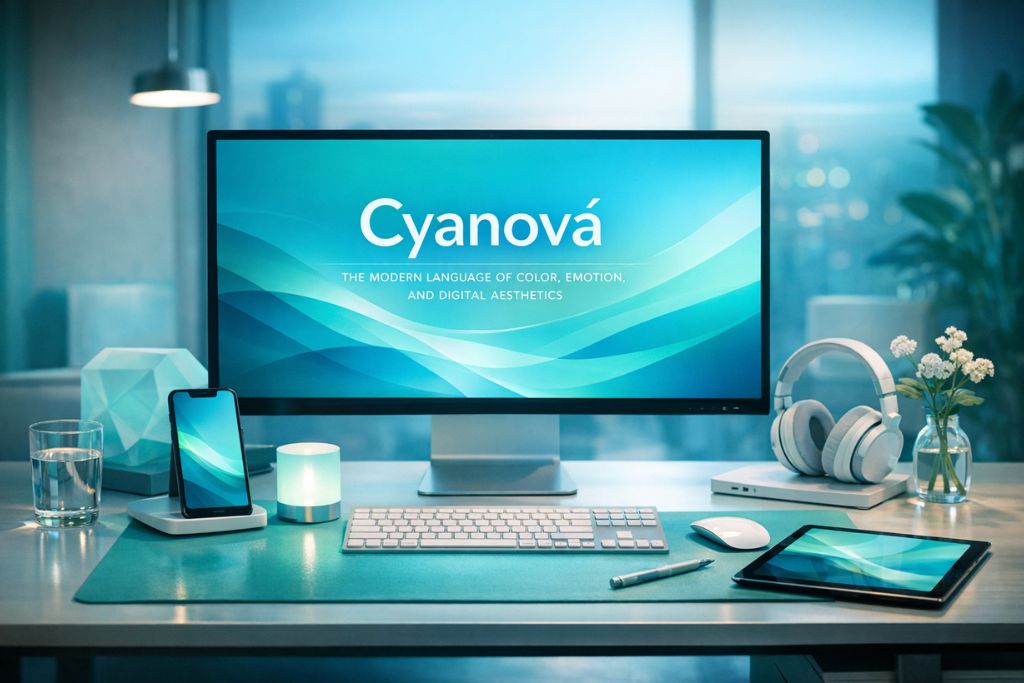
A subtle shift in color perception can change how entire digital worlds feel, how brands communicate trust, and how human emotion interacts with screens. Among emerging aesthetic concepts shaping this visual transformation, cyanová stands out as a refined expression of blue-green identity that blends science, design, and emotion into a single visual philosophy. cyanová is not just a color reference; it is becoming a symbolic language used across creative industries to define clarity, calmness, and modern sophistication in visual communication.
Understanding Cyanová as a Contemporary Color Identity
cyanová is best understood as a conceptual evolution of cyan, existing in the spectrum between blue and green but extending beyond strict technical definitions. It represents a softened, modern interpretation of cyan that adapts easily to digital environments, artistic compositions, and branding systems. Rather than functioning as a fixed hexadecimal code or rigid pigment identity, cyanová operates as a visual experience, shaped by perception, context, and emotional intention.
What makes cyanová particularly interesting is its fluidity. It does not confine itself to a single shade or tone but instead describes a family of visual expressions that share a common emotional signature. This signature is often associated with clarity, freshness, and technological elegance. In contemporary design thinking, cyanová becomes less about color measurement and more about atmospheric effect, influencing how users feel when they encounter it on screens, packaging, or environments.
The Origins and Linguistic Essence of Cyanová
The word cyanová draws inspiration from the root “cyan,” a term originating from ancient Greek references to deep blue tones. Over time, cyan evolved into a foundational color in both digital and print systems, particularly within RGB and CMYK models. The extension “ová” introduces a stylistic linguistic transformation that gives the term a more refined and conceptual identity, suggesting adaptation, evolution, and aesthetic reinterpretation.
In modern creative discourse, cyanová is used as a descriptor rather than a strict classification. Designers and visual artists often adopt such hybrid terms to express color experiences that traditional naming systems fail to capture. Cyanová emerges from this need for expanded vocabulary in a world where digital aesthetics evolve faster than standardized color naming conventions can adapt.
Cyanová in Color Theory and Visual Perception
Within the framework of color theory, cyanová sits at a fascinating intersection between cool tones and energetic vibrancy. It inherits the calming properties of blue while maintaining the refreshing vitality of green. This duality allows cyanová to function as both a grounding and invigorating visual force depending on its application.
Human perception plays a critical role in how cyanová is experienced. The human eye is particularly sensitive to blue-green wavelengths, which is why tones within this range often feel stable and comfortable to observe over long periods. Cyanová leverages this physiological response, making it especially effective in environments where sustained attention is required, such as digital dashboards, applications, and immersive media interfaces.
Rather than overwhelming the viewer, cyanová tends to harmonize visual space. It reduces visual fatigue while maintaining enough chromatic presence to remain engaging. This balance is what makes it increasingly relevant in modern interface design and digital aesthetics.
The Psychological Dimension of Cyanová
Color psychology reveals that cyanová carries strong associations with calmness, mental clarity, and emotional balance. It is often perceived as a refreshing visual experience that encourages focus without creating tension. Unlike warmer colors that stimulate urgency or excitement, cyanová promotes a steady cognitive rhythm that supports thoughtful engagement.
This psychological profile makes cyanová particularly valuable in environments where mental clarity is essential. It is frequently associated with trust, openness, and intellectual transparency. These associations explain why cyanová-like tones are often found in technology platforms, wellness applications, and communication tools that aim to build user confidence and reduce cognitive overload.
On a deeper emotional level, cyanová can also evoke a sense of openness and expansion. It mirrors natural elements such as ocean water and clear skies, both of which are linked to feelings of freedom and spaciousness. This emotional resonance contributes to its growing popularity in both digital and physical design environments.
Cyanová in Digital Design and User Experience
The rise of digital-first experiences has significantly increased the relevance of cyanová. In user interface design, color is not merely decorative; it is functional, guiding attention, defining hierarchy, and shaping emotional tone. Cyanová excels in this context due to its balance between visibility and subtlety.
Designers often use cyanová as a primary or secondary accent color in applications that require a clean, modern aesthetic. It works particularly well in minimalist interfaces where excessive color variation could disrupt usability. Instead of competing for attention, cyanová integrates smoothly into visual systems, supporting readability and intuitive navigation.
In user experience design, cyanová also contributes to perceived technological sophistication. It is frequently associated with innovation, artificial intelligence systems, and forward-thinking digital platforms. Its presence often signals modernity without aggressive visual intensity, making it a preferred choice for brands seeking a balanced digital identity.
Branding, Identity, and the Strategic Use of Cyanová
In branding, color is one of the most powerful tools for shaping perception, and cyanová has emerged as a strategic choice for companies that want to communicate clarity, trust, and innovation simultaneously. Unlike traditional corporate blues that may feel static or overly formal, cyanová introduces a more dynamic and contemporary identity.
Brands that incorporate cyanová often position themselves within technology, wellness, sustainability, or creative industries. The color helps communicate transparency and progressiveness while maintaining emotional accessibility. It creates a visual identity that feels both professional and approachable, which is increasingly important in competitive digital markets.
Cyanová also supports brand differentiation. In a saturated visual landscape, where many companies rely on similar blue-based palettes, cyanová introduces a nuanced variation that feels fresh without being unfamiliar. This subtle distinction can significantly enhance brand recall and emotional engagement.
Cyanová in Fashion and Cultural Expression
Beyond digital and branding applications, cyanová has found its place in fashion and cultural aesthetics. Designers are drawn to its versatility and its ability to adapt to both futuristic and natural themes. In fashion, cyanová often appears in fabrics that emphasize fluidity, movement, and modern elegance.
Its cultural appeal lies in its ambiguity. Cyanová does not belong exclusively to any single tradition or style direction. Instead, it bridges multiple aesthetic influences, from minimalism to futuristic design, from natural inspiration to technological abstraction. This flexibility allows it to function as a cultural connector, reflecting the hybrid nature of contemporary visual identity.
In artistic contexts, cyanová is often used to explore themes of digital nature, synthetic environments, and emotional neutrality. It becomes a tool for expressing the evolving relationship between humans and technology, where boundaries between organic and artificial aesthetics continue to blur.
Cyanová in Interior and Spatial Design
Interior design has also embraced cyanová as a means of creating calm, modern environments. In architectural spaces, color plays a critical role in shaping mood and spatial perception. Cyanová contributes to environments that feel open, breathable, and visually balanced.
It is often used in offices, creative studios, and wellness spaces where mental clarity and reduced stress levels are priorities. When applied to walls, lighting accents, or decorative elements, cyanová can transform a space into a visually cohesive environment that encourages focus and relaxation.
The spatial quality of cyanová is particularly effective when paired with neutral materials such as wood, glass, or metal. This combination enhances its modern character while maintaining a sense of natural grounding. As a result, cyanová becomes a bridge between organic comfort and technological precision in interior environments.
The Future of Cyanová in Creative Industries
As design systems continue to evolve, cyanová is likely to gain even greater relevance across creative disciplines. Its adaptability makes it suitable for emerging technologies such as augmented reality, virtual environments, and adaptive user interfaces. In these contexts, color must respond dynamically to user behavior and environmental conditions, and cyanová’s balanced visual profile makes it an ideal candidate for such systems.
The future of cyanová also lies in its conceptual flexibility. It is not bound by strict definitions, which allows designers and artists to reinterpret it across different mediums and cultural contexts. This openness ensures that cyanová will continue to evolve alongside technological and artistic innovation.
In a broader sense, cyanová reflects a shift in how color is understood in the modern era. It is no longer just a visual attribute but an emotional and functional system that shapes human interaction with digital and physical environments.
Conclusion: Cyanová as a Visual Philosophy of the Modern Age
cyanová represents more than a color trend; it embodies a new way of thinking about visual communication. It merges emotional psychology, digital design principles, cultural expression, and aesthetic flexibility into a unified visual language. Its presence in design, branding, fashion, and architecture signals a broader movement toward calm, intelligent, and adaptive aesthetics.
As creative industries continue to expand into increasingly complex digital environments, cyanová offers a stable yet flexible foundation for visual identity. It stands as a reminder that color is not just something seen, but something felt, interpreted, and experienced.