
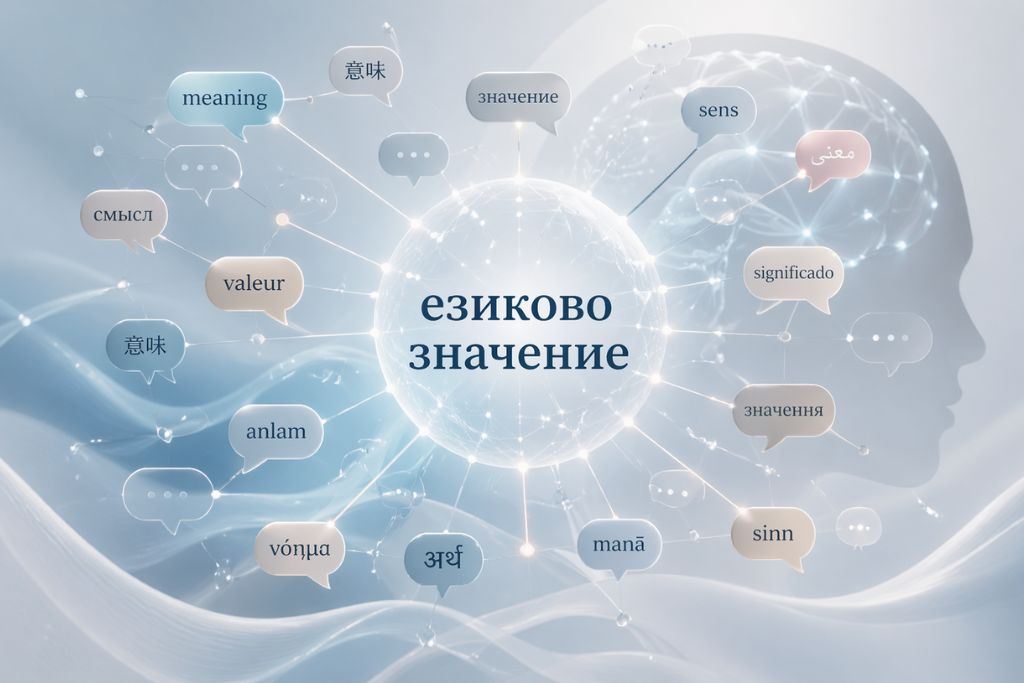
Understanding the Depth of Езиково значение
Language shapes reality in ways often unnoticed, yet constantly experienced. The concept of “езиково значение” stands at the heart of this phenomenon, defining how words carry meaning and how those meanings are interpreted across contexts. Far beyond simple dictionary definitions, “езиково значение” reflects a layered system where sound, structure, culture, and human intention converge to produce understanding. Each spoken or written word becomes a bridge between thought and perception, and that bridge is sustained by meaning.
Within the academic field of Linguistics, “езиково значение” represents a foundational principle that explains how communication functions at its core. Words do not exist in isolation; they operate within systems that give them value and clarity. Without meaning, language would collapse into noise, and communication would lose its purpose entirely. This makes “езиково значение” not just a theoretical concept but a practical necessity in everyday life.
Semantic Foundations of Езиково значение
Exploration of meaning leads directly into Semantics, where “езиково значение” is studied in depth. Semantics examines how words signify objects, ideas, and relationships, and how those meanings shift over time. Language evolves, and with it, meanings expand, contract, or transform entirely. This dynamic nature ensures that “езиково значение” remains fluid rather than fixed.
A single word can hold multiple meanings depending on context, tone, and cultural background. This flexibility allows language to remain expressive and adaptable. At the same time, it introduces complexity, requiring speakers and listeners to rely on shared knowledge and situational cues. Meaning becomes a collaborative act rather than a static property, shaped by both speaker intention and listener interpretation.
Structure and Meaning in Language Systems
Connection between structure and meaning forms another crucial dimension of “езиково значение.” Grammar plays a silent yet powerful role in shaping interpretation. Changes in tense, number, or word order can significantly alter meaning without changing the core vocabulary. This demonstrates that meaning is not only embedded in words but also in how those words are arranged.
The Swiss linguist Ferdinand de Saussure introduced the idea that language consists of signs made up of form and concept. This perspective highlights how “езиково значение” emerges from relationships rather than isolated elements. Words gain meaning through contrast, association, and usage within a broader system. Such insights reveal that language is not merely a tool but a structured network of interdependent meanings.
Context as a Defining Force
Context transforms “езиково значение” from a static definition into a living process. Same sentence can convey entirely different meanings depending on situation, tone, or speaker intent. This is where Pragmatics becomes essential, focusing on how meaning operates in real-world communication.
Consider a simple phrase expressing temperature. In one situation, it may describe a physical condition, while in another, it may function as an indirect request. Such variations demonstrate that “езиково значение” extends beyond literal interpretation. Meaning is negotiated within context, influenced by environment, relationships, and shared understanding. This makes communication both rich and complex, requiring constant interpretation.
Cultural Dimensions of Езиково значение
Language cannot be separated from culture, and “езиково значение” reflects this connection deeply. Words carry cultural weight, embedding traditions, values, and social norms within their meanings. Cultural context shapes how language is used and understood, making meaning a reflection of collective experience.
Different societies may assign distinct meanings to similar expressions, creating variation in interpretation. This diversity highlights the adaptability of “езиково значение” across cultures. It also underscores the challenges of translation, where preserving meaning requires more than replacing words. Cultural awareness becomes essential for maintaining the integrity of communication.
Evolution and Change in Meaning
Language evolves continuously, and “езиково значение” evolves with it. New words emerge, old meanings shift, and expressions adapt to changing realities. Technological advancements, social transformations, and global interactions all contribute to this process. Meaning is not static but responsive, reflecting the dynamic nature of human experience.
Historical analysis reveals how meanings have transformed over time, illustrating the flexibility of language. Words that once held specific connotations may develop broader or entirely different interpretations. This ongoing evolution ensures that language remains relevant and capable of expressing new ideas.
Cognitive Aspects of Meaning
Human cognition plays a central role in shaping “езиково значение.” Understanding language involves mental processes that connect words to concepts, experiences, and emotions. Meaning is constructed in the mind, influenced by memory, perception, and prior knowledge. This cognitive dimension adds depth to linguistic analysis, showing that meaning exists not only in language but also in human thought.
Interpretation varies between individuals, reflecting differences in background and perspective. Despite this variation, shared linguistic systems allow for effective communication. This balance between individual interpretation and collective understanding defines the complexity of “езиково значение.”
Role in Modern Communication
Digital communication has transformed how “езиково значение” operates in contemporary contexts. Online platforms encourage rapid exchange of information, often relying on concise expressions and evolving linguistic trends. Emojis, abbreviations, and informal language introduce new layers of meaning, expanding traditional definitions.
Clarity becomes increasingly important in such environments, where misunderstandings can arise بسهولة. Effective communication depends on precise use of language, ensuring that intended meaning aligns with interpretation. Writers and communicators must remain aware of context, audience, and medium to maintain clarity.
Importance in Writing and Content Creation
Professional writing depends heavily on accurate and effective use of “езиково значение.” Clear expression enhances readability and ensures that messages are understood as intended. Ambiguity can weaken communication, making precision essential in both academic and creative contexts.
Content creators must balance creativity with clarity, using language to engage readers while maintaining meaning. Strategic use of keywords, including “езиково значение,” improves visibility and relevance in digital spaces. Meaning becomes not only a linguistic concept but also a practical tool for communication and engagement.
Conclusion
“Езиково значение” represents the essence of language, connecting words to meaning and meaning to human experience. It operates across multiple dimensions, including structure, context, culture, and cognition. This complexity makes language both powerful and adaptable, capable of expressing a vast range of ideas and emotions.
Understanding “езиково значение” enhances communication, enabling individuals to convey thoughts more effectively and interpret messages with greater accuracy. Language becomes more than a medium; it becomes a system of meaning that shapes perception and interaction. Through this lens, communication emerges as a dynamic process, grounded in the intricate interplay of words and meaning.